Pen Peptide
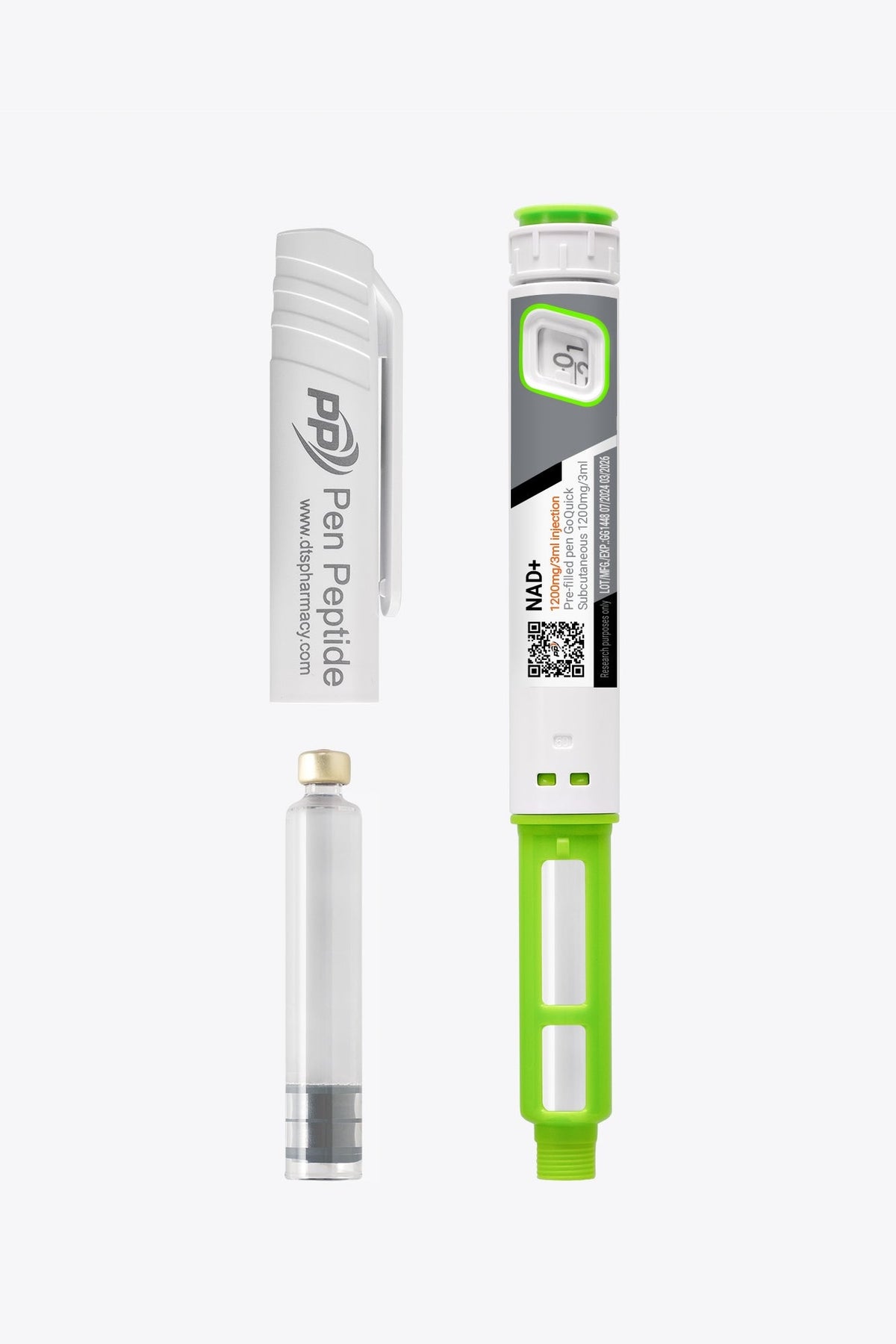
NAD+ (Nicotinamide Adenine Dinucleotide) | Pen
NAD+ (Nicotinamide Adenine Dinucleotide) | Pen
Pre-Mixed Stabilized Pen
Couldn't load pickup availability
- 🥇 The first peptide brand with Pre-Mixed Pen stabilized formulations
- 📦 We ship with FedEx Priority in thermo-insulated packaging
- 💳 Secure payment by bank transfer
- 🧪 Purity ≥98% for precise research protocols
✅ Proper storage
✅ Proper storage
To ensure the optimal quality of our products, we pay special attention to the delivery and storage of peptides. All our shipments are sent in special cooling boxes that maintain the required temperature during transportation. This guarantees that the products will reach you in perfect condition.
After receiving the peptides, it is important to store them properly to preserve their stability and effectiveness. We recommend storing them at a temperature between 2°C and 8°C in a refrigerator. This ensures that the peptides retain their properties throughout their shelf life.
✅ Order and Delivery
✅ Order and Delivery
At Pen Peptide, we ensure fast and secure delivery of your order with FedEx Priority, maintaining the highest quality and reliability throughout the process.
How we process your order:
Once your payment is confirmed via bank transfer or debit/credit card, we dispatch your order on the next business day.
Orders are carefully packaged in temperature-controlled cooling boxes to ensure product integrity during transportation.
Delivery timeframe:
Standard delivery time within the Europe: 1 to 3 business days (typically 1-2 business days for most locations).
Deliveries are handled exclusively by DHL Express, providing a fast and reliable shipping experience.
Tracking & order confirmation:
After your payment has been successfully processed, you will receive an email confirmation with your tracking number.
You can use the provided tracking link to monitor your shipment’s progress and estimated delivery time.
With Pen Peptide, you can trust that your order will arrive quickly and in perfect condition, ensuring a seamless and efficient experience.
✅ Why choose Pen Peptide?
✅ Why choose Pen Peptide?
If you are looking for peptides of the highest quality with over 98% purity, Pen Peptide is one of the best places where you can easily and securely order online. At Pen Peptide, we specialize in the synthesis of highly purified peptides intended exclusively for Research & Development Use Only.
Our peptides are produced in certified GMP laboratories, adhering to strict standards of quality, safety, and control. Each product undergoes rigorous testing for purity and stability to ensure you receive research materials with verified origin and maximum effectiveness.
We understand how important fast and reliable service is for our customers. That’s why we offer express delivery within 1 to 3 business days. All shipments are securely packaged to maintain product quality during transportation.
✅ Molecular Structure Stabilization Process Technology (MSSPT)
✅ Molecular Structure Stabilization Process Technology (MSSPT)
The Molecular Structure Stabilization Process Technology (MSSPT) focuses on preserving the structural integrity and functionality of molecules under harsh conditions and during prolonged storage periods. This process may involve modification of the molecule itself, optimization of storage conditions, or the use of auxiliary components that protect the molecules from degradation.

Key stages of the process:
1. Molecular modification:
Chemical and genetic engineering: Involves altering the structure or composition of the molecule to make it more resistant to degradation. For example, protein cross-linking can prevent unfolding, or modification can reduce susceptibility to chemical reactions.
Chemical modification: The introduction of protective groups or changes to reactive sites can prevent unwanted chemical reactions and degradation.
2. Optimization of storage conditions:
Lyophilization (freeze-drying): This method removes water from the sample, helping to preserve structure and prevent degradation during storage.
Storage in specialized containers: Using containers that protect from light and oxygen can safeguard molecules from photodegradation or oxidation.
Controlled-release systems: These systems provide a steady concentration of the therapeutic molecule, but introduce additional challenges related to stabilizing molecules over extended release periods.
3. Use of auxiliary components:
Buffers: Buffers help maintain stable pH levels, which are crucial for many chemical reactions and biological processes.
Antioxidants: These additives can prevent or reduce oxidative degradation, which is a common cause of molecular instability.
Stabilizing agents: These help prevent aggregation, precipitation, or other forms of degradation.
4. Understanding molecular interactions:
Thermodynamic equilibrium: A fundamental understanding of the interactions between a molecule and its environment is essential for developing effective stabilization strategies.
Detergents for membrane proteins: Specialized detergents, such as those developed to stabilize membrane proteins, help maintain their structure in solution.
Molecular simulations: Techniques such as molecular dynamics can provide valuable insights into the stability and behavior of molecules.
5. Examples of stabilization techniques:
Protein stabilization: Strategies include forming disulfide bonds, using stabilizing agents or chaperones, and introducing stabilizing mutations.
Polymer stabilization: Methods include the addition of antioxidants or the use of modified clay minerals that prevent polymer degradation.
Propellant stabilization: Stabilizers are essential to prevent the decomposition of propellants and ensure their safe and reliable performance.
Pen Peptide – Proven Molecular Stabilization
Our peptide pens are developed with a strong focus on preserving the biological activity and structural stability of the active compounds. Thanks to thoroughly researched stabilization processes—including optimization of storage environments and precise modification of molecular structure—we achieve long-term durability and reliability of the peptides under appropriate storage conditions.
The MSSPT (Molecule Structure Stabilization Process Technology) we use incorporates various approaches to maintain molecular integrity, including the use of suitable buffers, antioxidants, and stabilizing agents. The MSSPT technology allows for the integration of multiple active molecules into a compact volume without compromising their structural integrity or biological effectiveness. Additional optimization of storage conditions—such as pH control and prevention of photodegradation and oxidation—ensures maximum stability and bioactivity of the peptides.
These precise measures guarantee that the final product remains effective and stable even after extended storage periods, making it a secure and reliable option for use in various research protocols.
This product is intended exclusively for scientific and research purposes and for use as a reference standard in HPLC analysis. It is not an approved medicinal product. It is not intended for the diagnosis, treatment, or prevention of diseases in humans or animals. It has not been approved by the FDA, EMA, or any other regulatory authority. The information on this page is provided solely for scientific and informational purposes and does not constitute medical advice, a recommendation for use, or a claim of clinical efficacy or safety.
What is NAD+ (Nicotinamide Adenine Dinucleotide)?
NAD+ (Nicotinamide Adenine Dinucleotide) is a coenzyme that occurs naturally in every cell of the human body. It is an essential biological component necessary for cellular energy production, metabolism, regeneration, and the maintenance of normal mitochondrial function. NAD+ is involved in reactions that regulate gene expression, redox balance, cellular communication, and mechanisms associated with aging.
NAD+ levels naturally decline with age. This decline is associated with reduced energy, slower metabolism, impaired regenerative processes, and changes in cognitive functions. For this reason, NAD+ is among the most extensively studied molecules in longevity research and cell biology. The NAD+ | Pen format offers a standardized, stabilized, and precise concentration for research protocols requiring control over dosage and consistency of administration.
What benefits does NAD+ offer?
1. Improved cellular energy and mitochondrial function
NAD+ plays a key role in mitochondrial processes that provide the energy (ATP) every cell needs to function. Increased NAD+ levels may contribute to optimizing energy metabolism – an important aspect of investigations into physical endurance, regeneration, and cellular performance.
2. Support for healthy aging
One of the most important research topics surrounding NAD+ is its role in maintaining the mechanisms responsible for slowing cellular damage. NAD+ influences the activity of sirtuin enzymes, key markers associated with longevity. NAD+ is therefore a valuable molecule in studies on aging and cellular protection.
3. Improved cognitive function
Studies show that NAD+ may help improve neuronal communication, support memory, and promote mental clarity. As a key factor in the energy metabolism of nervous tissue, NAD+ plays a significant role in research areas related to cognitive processes and brain energy.
4. Support for regenerative processes
Numerous research findings demonstrate that NAD+ is involved in cellular repair and regeneration. As a coenzyme in DNA repair processes, it is crucial in models of cellular damage, physical exertion, and oxidative stress.
5. Optimization of metabolic health
NAD+ supports the function of key metabolic pathways. It may contribute to regulating glucose balance, lipid metabolism, and energy efficiency, making it a relevant tool in metabolic studies.
6. Support for detoxification and antioxidant mechanisms
NAD+ is an important cofactor for enzymes that protect the body from oxidative processes. It may support systems involved in eliminating free radicals and strengthening cellular resilience.
Mechanism of action of NAD+
NAD+ acts as a central electron carrier in cellular metabolic processes. It plays a fundamental role in glycolysis, the citric acid cycle (Krebs cycle), and oxidative phosphorylation – the main energy-producing pathways of the mitochondria.
In addition, NAD+ is an indispensable component of the activity of sirtuins and PARP enzymes, which are responsible for DNA regulation, cellular processes, and stress resistance.
Declining NAD+ levels impair the ability of cells to maintain their normal function. By supporting optimal NAD+ levels, the molecule contributes to regulatory, repair, and energy efficiency mechanisms that are central to numerous areas of biological research.
Proper use and dosage of NAD+ (Nicotinamide Adenine Dinucleotide) | Pen:
NAD+ 1200 mg / 3 ml
Total: 300 units
1 unit = 4 mg
Dose: 10 units twice daily, every other day
Duration: 30 days, followed by a 15–20-day break
NAD+ 500 mg / 3 ml
Total: 300 units
1 unit = 1.66 mg
Dose: 24 units twice daily, every other day
Duration: 30 days, followed by a 15–20-day break
NAD+ 200 mg / 2 ml
Total: 200 units
1 unit = 1 mg
Dose: 40 units twice daily, every other day
Duration: 30 days, followed by a 15–20-day break
Research on NAD+ (Nicotinamide Adenine Dinucleotide) in various fields:
NAD+ is among the most central molecules in modern biology and is the subject of numerous high-quality scientific publications. The main research areas include:
-
Gerontology – its role in sirtuin activity and cellular aging is among the most extensively studied topics in longevity research.
-
Cellular metabolism – NAD+ is directly associated with energy balance and mitochondrial function.
-
Cognitive science – investigates effects on brain energy and neuronal regeneration.
-
Physical endurance – studies analyze the connection between NAD+ and athletic performance.
-
DNA repair – NAD+ is involved in processes that enable protection against cellular damage.
-
Oxidative stress – NAD+ plays a key role in the body's antioxidant mechanisms.
Possible side effects of NAD+ (Nicotinamide Adenine Dinucleotide) | Pen:
NAD+ is generally considered well tolerated in research settings. According to the scientific literature, possible reactions may include a mild feeling of tightness, stomach discomfort, mild headaches, or temporary changes in energy levels. These effects are generally rare, mild, and temporary.
In every research protocol, it is important to use the correct concentrations and quantities according to the specified methodology and to avoid exceeding the dosages established in the study protocol.
For laboratory purposes and personal observation only. Not for human consumption.
For laboratory purposes and personal observation only. Not for human consumption.
The information has been collected from numerous studies and analyses conducted over the years and is not intended for diagnosing, treating, or preventing any diseases.