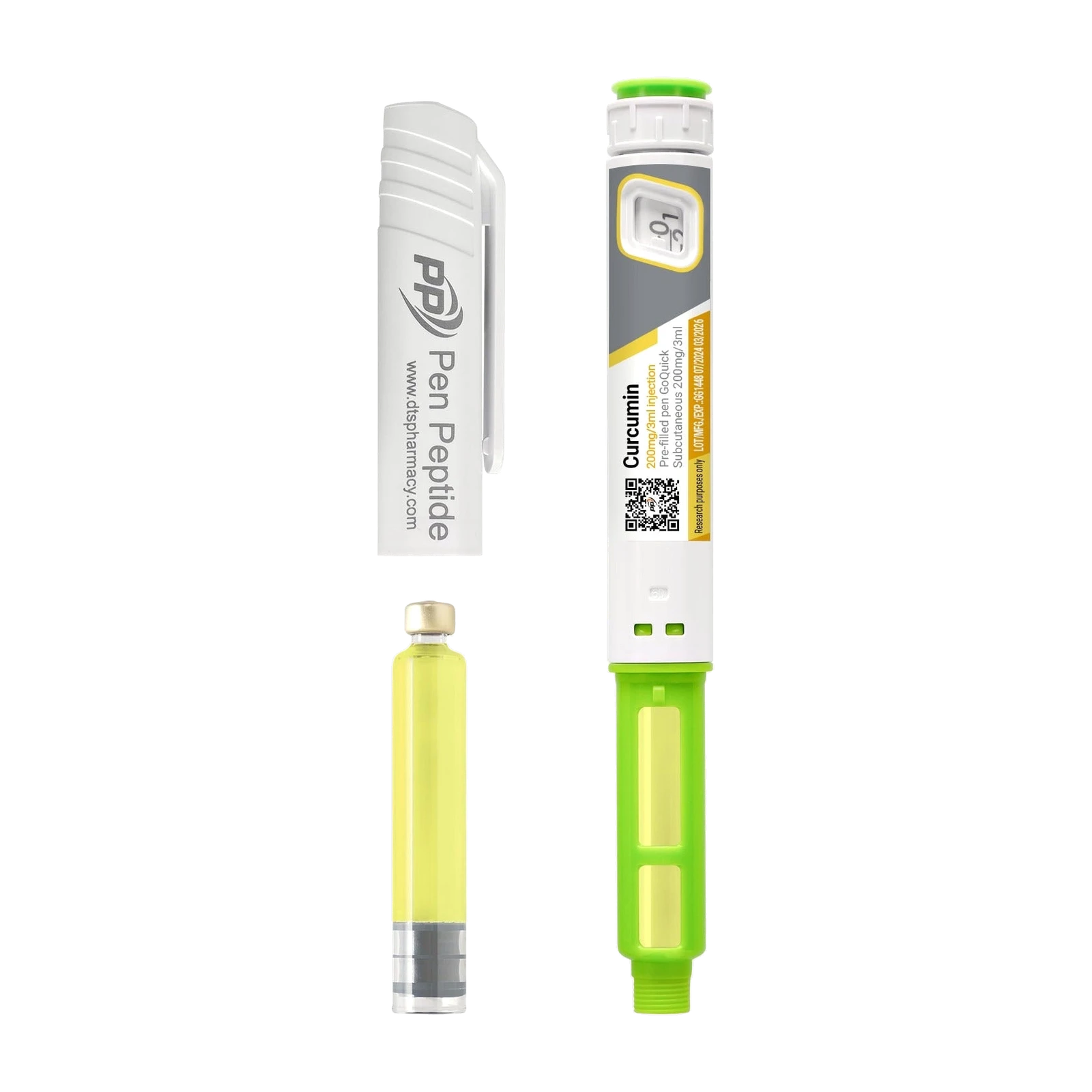
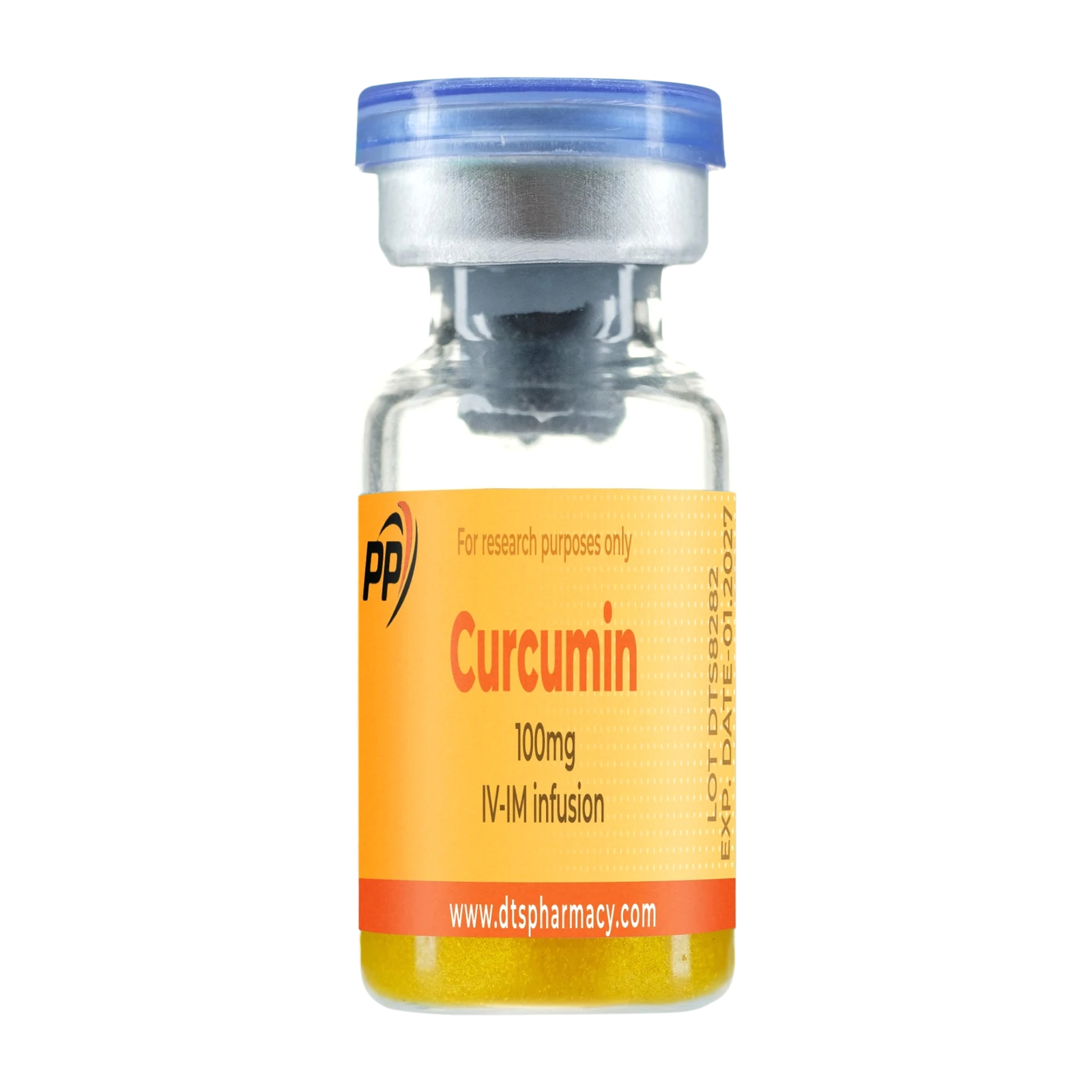
Vial
Research use onlyCurcumin 25, 100mg
VAT included. Shipping calculated at checkout.
In stock
Secure delivery
Secure delivery with FedEx within 1–2 business days after payment confirmation
Payment methods
- Bank transfer
What is curcumin?
Curcumin is the biologically active compound obtained from the rhizome of Curcuma longa (turmeric) – a plant that has been used for centuries in traditional medicine and in modern phytotherapy. It is a polyphenolic substance with strong antioxidant activity that is involved in numerous cellular and biochemical processes. Curcumin is the subject of intensive scientific research because of its ability to modulate inflammatory signalling pathways, support the normal function of the immune system and have positive effects on various physiological processes.
In its pure form, curcumin has low bioavailability when taken orally, which has led to the development of alternative forms for direct introduction into the systemic circulation. Intravenous and intramuscular formulations allow significantly higher bioavailability and more precise control of the concentration. These forms are particularly valuable in research protocols focused on analysing the cellular, anti-inflammatory and regenerative properties of curcumin.
What are the benefits of curcumin?
1. Support for anti-inflammatory processes
Curcumin is known for its ability to modulate key inflammatory molecules, including NF-κB and COX-2. This makes it an important component in studies focusing on inflammatory responses and chronic inflammatory conditions.
2. Strong antioxidant effect
Curcumin protects cells from oxidative stress by neutralising free radicals and stimulating antioxidant enzymes such as superoxide dismutase and catalase.
3. Support for the immune system
Curcumin can influence cellular immune status, support the function of immune cells and promote a normal immune response under conditions of stress or strain.
4. Improved cell regeneration
Available data show that curcumin supports processes involved in tissue regeneration, which makes it particularly interesting for research protocols focused on regeneration and cellular health.
5. Support for cognitive functions
Some scientific publications describe curcumin as a possible modulator of neuronal signalling pathways associated with memory and concentration.
6. Improved metabolic processes
Studies suggest that curcumin may have a positive influence on glucose metabolism and the lipid profile, which makes it an interesting molecular component in metabolic research protocols.
Curcumin in combination with exosomes:
Curcumin in combination with exosomes represents an innovative approach in medicine and biology. Below are some of the key aspects of this combination that have been studied:
Exosomes: microscopic vesicles released by cells that play a central role in cellular communication by transporting various molecules such as proteins, RNA and DNA between cells. They are being intensively researched for their potential in fields such as regenerative medicine, immunotherapy and targeted drug delivery.
Curcumin: the active component of turmeric root with antioxidant, anti-inflammatory and potentially anti-carcinogenic properties.
Combination of curcumin and exosomes: combining curcumin with exosomes can improve the cellular uptake of curcumin. Exosomes can act as natural transport systems and increase the stability and bioavailability of curcumin in the body. This can increase the efficacy of curcumin many times over in targeted therapeutic approaches – for example in the treatment of inflammatory diseases or cancer.
Potential therapeutic applications: this combination can be studied in connection with targeted antitumour strategies, models of inflammatory diseases and protocols in regenerative medicine and cellular recovery.
Correct use and dosage of curcumin for intravenous or intramuscular administration:
It is administered 2 to 3 times per week.
Intravenously, 100 mg is administered per dose – for an unlimited period, depending on the needs of the user and the goals of the protocol.
Intramuscularly, 25 mg is administered per dose – also for an unlimited period, depending on the specific goals of the protocol.